Workwear and PPE for GACP Cannabis Farm Bangkok
Clean garments block dust, hair, and microorganisms from clean areas. PPE reduces direct contact with flowers. Consistent uniforms support auditor trust and visitor confidence. This improves credibility for cannabis wholesale Bangkok and strengthens Solar Farm Thailand’s position as a cannabis wholesaler in Thailand.
GACP expects clear zoning and documented clothing rules. Solar Farm Thailand assigns uniforms and PPE by area, trains staff before room entry, and inspects equipment on a set schedule. Records show who wore what, where, and when. This traceability keeps medical cannabis safe and compliant.
Required Workwear by Role
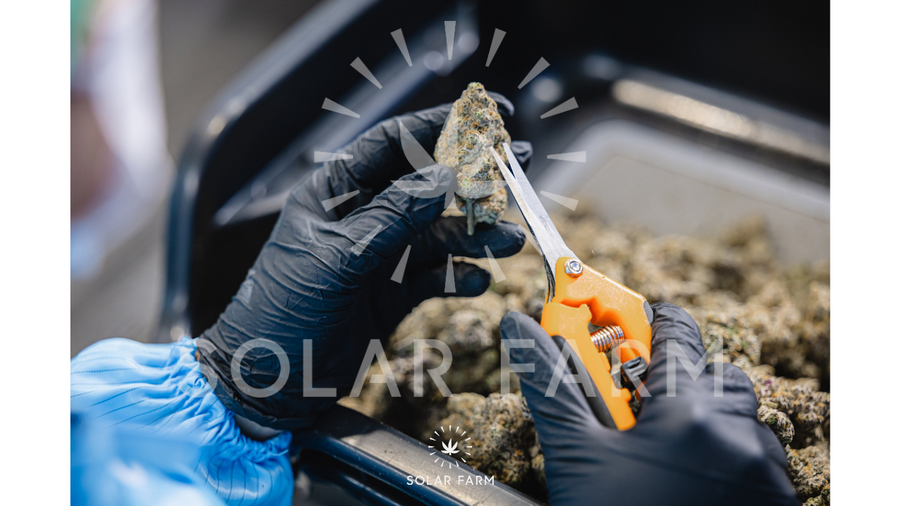
Universal items include gloves, face masks, and hair covers. Outside areas use safety boots. Cultivation zones use rubber boots. Trimming teams wear cleanroom suit for cleanliness. Cutting and flower prep teams use green gowns for plant handling. Safety helmets and sunglasses protect eyes and heads in designated work areas. The result is one standard across all cannabis farm Bangkok operations.

Trimming Room Standards
Leaf trimming needs precision and strict hygiene. Staff wear gloves, masks, hair covers, and cleanroom suit. Rubber boots prevent cross-contamination at the bench and floor level. Clean entry and exit routines limit risk to the cannabis wholesale Bangkok supply.
Cutting and Flower Preparation
Teams handling cuts and flower staging wear gloves, masks, hair covers, and green gowns. Helmets and sunglasses protect against impacts and bright task light. Rubber boots remain mandatory in cultivation and processing paths. The workflow keeps flowers clean and audit-ready for cannabis wholesale in Thailand.
Entry, Exit, and Care
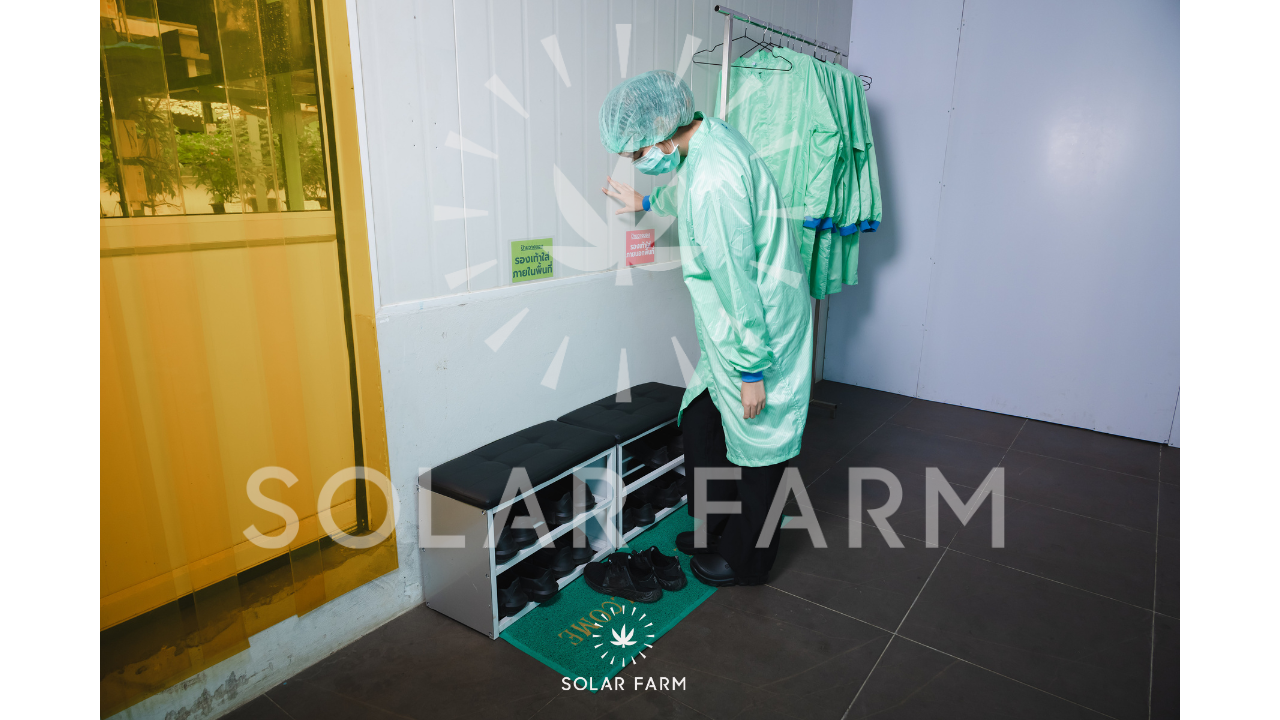
Garments are stored in labeled lockers by zone. Donning and doffing follow posted steps at each airlock. Single-use items are discarded in marked bins. Reusable items are washed on a defined cycle and inspected before reuse. Deviations get recorded and corrected the same day.
What the Gowning Records Contain
A workwear rule only counts under GACP if it leaves a trail. Solar Farm Thailand’s who, what, where and when record at each room entry is the core document: one line per person, time and room, tied to the garment set issued. Typical practice is to log glove and mask changes on the same sheet, so a lapse traces to a specific batch.
Reusable garments need their own register: date out, date back, wash cycle and inspection result on return. Suits and gowns with tears, loose seams or staining are withdrawn and noted. Single-use stock is best issued from a controlled store, so consumption reconciles against logged entries.
A GACP auditor typically follows a named person through the chain: training record, entry log placing them in a zone, and the issue or laundry record for what they wore. A missing link leaves the control undocumented.
Where Workwear Controls Usually Fail
The commonest lapses are small and habitual: outdoor boots in a cultivation room, a hair cover leaving a fringe or beard exposed, gloves worn between rooms, a mask below the nose during trimming. None shows in a photograph; they surface on observation rounds and when logs are reconciled.
- Cross-zone garments: reissue a fresh set, note the room on the batch record, retrain before the next shift.
- Reused single-use items: clear the stock, check bin counts against the issue log, establish how reuse happened.
- Missing signatures: the entry is invalid, logged as a deviation, never back-filled.
A lapse with flower on the bench goes on the batch record so QA can weigh it when the independent third-party COA returns. The COA’s microbiological panel is the external check, not a substitute for clothing discipline.
How Licensed Buyers Verify Clothing Controls
Importers and wholesalers rarely take a uniform policy on trust. Typical due diligence is a request for the gowning SOP, sample entry logs and the zone map; on site, some also walk the airlock route and ask for a locker opened at random.
At Solar Farm Thailand the zone-based uniforms, training before room entry and inspection logs answer those requests, alongside the batch COA and the Thai GACP and EU-GACP certificates.
FAQs
Last updated: 22 September 2026