Air Lock Systems for GACP Cannabis Farm
Air locks stop dust, hair, and microbes before they reach grow rooms. They stabilize temperature, humidity, and pressure at entry points. Clear rules improve audit confidence for cannabis wholesale Bangkok and protect product quality.

GACP expects controlled transfers between zones. Solar Farm Thailand fits air locks at all entries, trains staff on use, and inspects units on a set schedule. Logs track checks, faults, and fixes to keep rooms compliant and traceable.

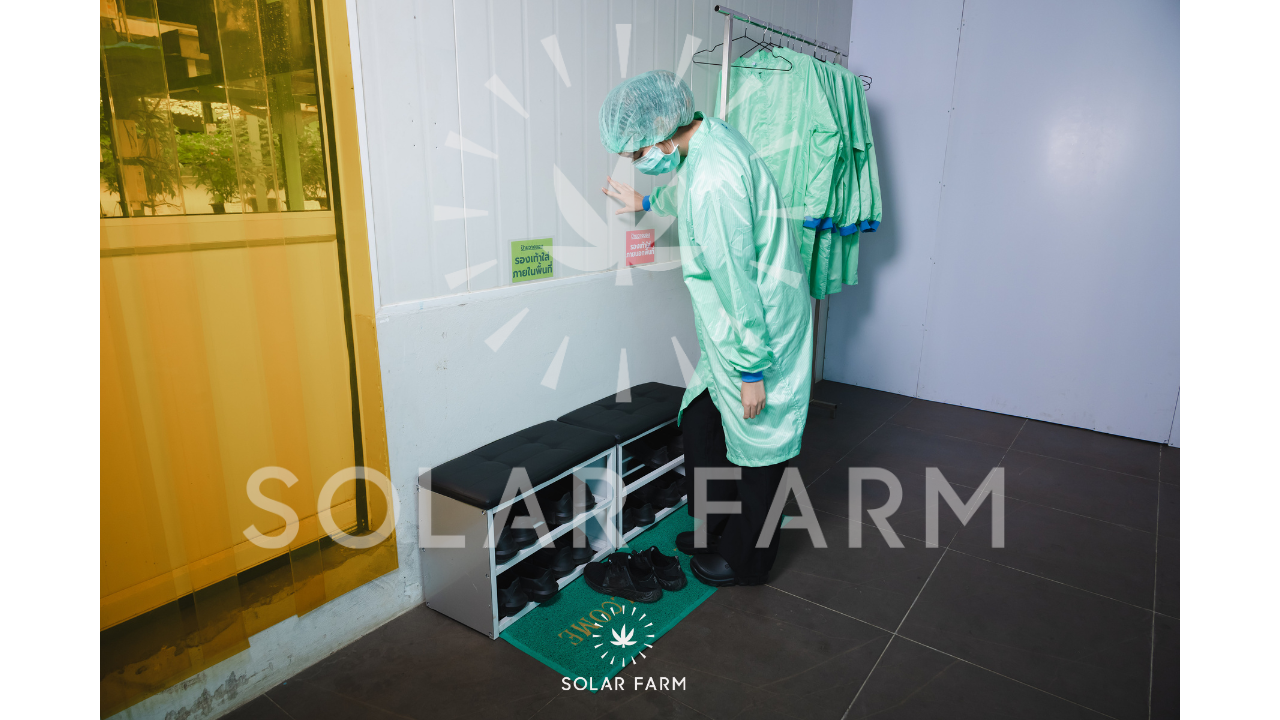
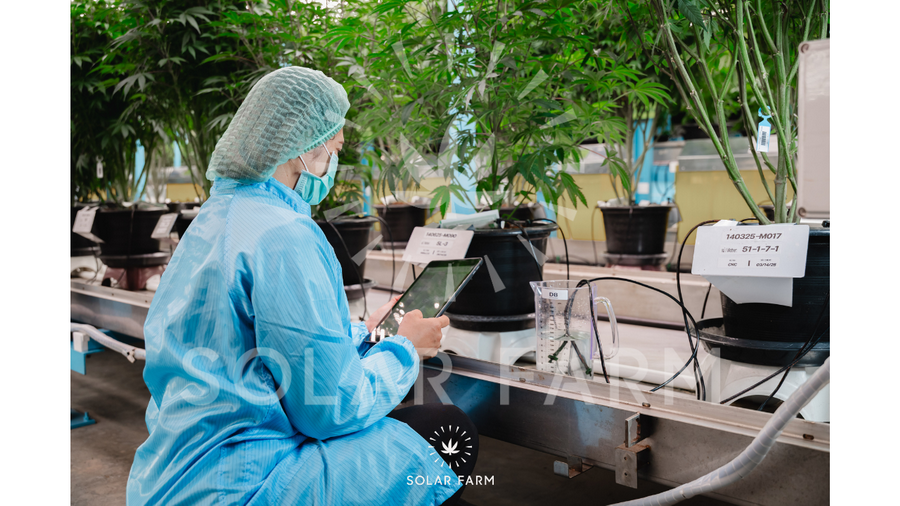

Entry and Exit Procedure
Pause at Door 1 and close it fully. Wait for seal confirmation. Open Door 2 only after Door 1 is closed. Move through, close Door 2, then sanitize touch points as posted. Never hold a door ajar for another person. One cycle per person.
Key Precautions
Never open both doors at once. Keep the outer door fully closed. Check gaskets and latches before each use. Remove visible debris at the threshold. Report weak closure force or alarm faults at once.
Upkeep and Monitoring
Doors, seals, and closers get weekly checks. Differential pressure is monitored and recorded per shift. Filters near air locks follow a fixed change cycle. Deviations trigger containment, cleaning, and re-verification before use.
Staff Readiness
All staff pass a short practical on air lock use before room access. Refresher training runs quarterly and after any deviation. Posted visuals at each air lock reinforce the sequence.
How air lock performance is checked
An air lock is a claim about pressure, so it has to be measured rather than assumed. Solar Farm Thailand checks the direction of airflow at each lock on a fixed round, and the reading is written down whether or not it has changed. A lock that has drifted is easy to miss by eye, because the door still opens and closes exactly as it did the day it passed.
Three things account for most of the drift we see. Filters load up and change the resistance of the path. A door left propped during a busy transfer breaks the cascade for as long as it stays open. And a fan speed adjusted for a hot afternoon does not always get set back. None of these is dramatic on its own, which is exactly why the round is scheduled instead of triggered by someone noticing a problem.
When a lock fails its check, the affected room is worked in a restricted way until the reading is back in range: no material moves in or out except what is needed to stabilise the crop, and the corrective work is logged against the room. The point of the log is not the individual reading, it is the trend across weeks, which is what tells us whether a filter change interval is right.
What a GACP auditor asks to see at the door
For an auditor at the Khlong Luang, Pathum Thani site north of Bangkok, the air lock review is mostly a records exercise: posted procedure, recent pressure log, deviation file and training register, read against each other. A log with no deviations is as much a warning sign as one with many: a lock that never drifts has usually not been measured.
The physical part is short: the auditor watches a member of staff go through unprompted, presses the gaskets, releases the door to see whether the closer latches it unaided, and compares the gauge with the last logged value.
Licensed buyers’ QA questionnaires ask the same things: how zone transfers are controlled, who signs the readings, how a failed check is closed out. Solar Farm Thailand answers from the log an auditor is shown, so buyer and auditor see one record.
People, materials and the same lock
Contamination does not only walk in; it arrives on trolleys, crates and tools, so people and materials cycle through separately. Standard practice is to wipe wheels and handles at the threshold, leave outer shipping cartons outside and take only the inner packaging forward.
Harvest days bring the heaviest traffic and the strongest temptation to shortcut. Typical practice is to schedule bulk movements at the start of a shift and to give one person the door as their only job. Nothing is stored in the lock between cycles; a lock used as a shelf stops being a lock.
Common failure modes and how they are closed
Air lock faults are rarely novel, so each corrective action is fixed in advance:
- Closer weakened, door stopping short of the latch: closer adjusted or replaced, that day’s cycles checked against the log.
- Gasket flattened along one edge: gasket replaced, reading retaken before the room is released.
- Gauge tube kinked after cleaning: tube reseated, zero re-checked before the reading is trusted.
- Threshold debris preventing full closure: cleaned, corridor cleaning frequency reviewed.
Each deviation entry names the fault, the person, the fix and the reading that confirmed it. An entry without that reading stays open, and open entries are reviewed at the weekly check so none quietly age out.
Last updated: 22 September 2026