Yeast and Mold Air Quality Control in Cannabis Farm
At Solar Farm Thailand, a cannabis farm in Pathum Thani, north of Bangkok, yeast and mold screening is routine in drying, trimming, and packaging spaces. The goal is simple: keep medical cannabis compliant and reliable for cannabis wholesale in Thailand.
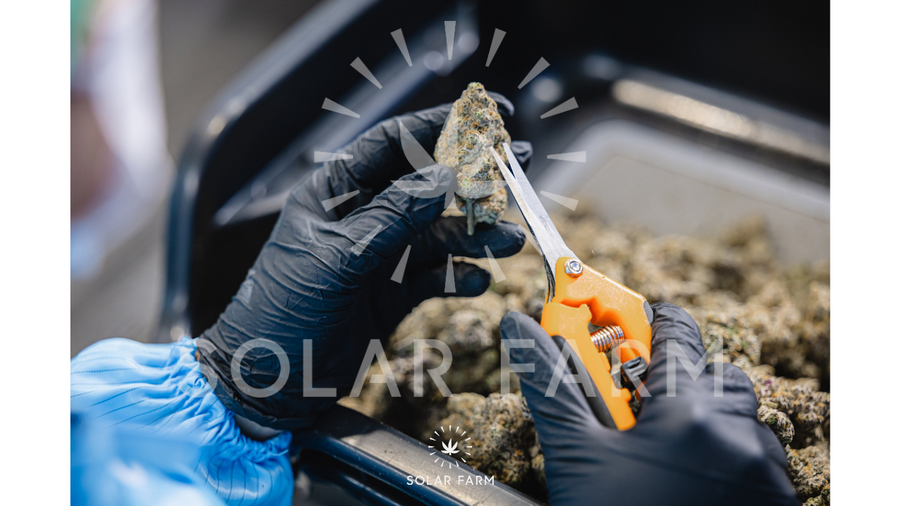
Yeast and mold testing matters because spores move fast and hide in busy rooms. Unchecked growth degrades cannabinoids and risks patient health. Proactive monitoring keeps flowers clean and safeguards cannabis wholesale Bangkok supply.
GACP sets the frame. Solar Farm Thailand schedules air checks every six months in drying rooms, trimming areas, and packaging storage. The team logs every result for traceability and audit readiness. This cadence maintains a defensible safety baseline for medical buyers.
Step by Step Air Sampling and Testing Procedure
Air testing at Solar Farm Thailand follows precise steps
- Sanitize hands and wear PPE before sampling
- Dispense 1 mL of solution onto test plates
- Expose plates at the front, center, and back of each room for 15 minutes
- Seal, label, and incubate plates for three days
- Record colony counts on day seven
This systematic approach ensures accurate monitoring in cannabis farm Bangkok facilities.
Recording and Interpreting Yeast and Mold Results
Data closes the loop. All results feed the air-test report. The team reviews counts across rooms and over time. Any abnormal rise triggers corrective actions such as targeted cleaning, HVAC checks, and resampling. The record proves control and supports cannabis wholesaler Thailand partners.
FAQs
What a Settle Plate Can and Cannot Tell You
A settle plate collects the spores that fall onto its growth medium during exposure, so it measures what lands on surfaces, not the total load in the air. It is a trend tool: Solar Farm Thailand reads each plate as one point in a series, comparing a room with its own earlier results at the same position.
The record must therefore note the room’s state during exposure: in use or idle, the headcount, whether doors were opened, and the controller’s temperature and humidity. A count that rises with a humidity excursion points to the environment rather than hygiene. Because moisture drives growth in stored flower, typical industry practice is also to confirm water activity before packaging.
Building the Record a GACP Auditor Will Ask For
An auditor wants evidence of a working system, not one clean result. The first request is usually the monitoring plan: sampling positions on a floor map, plate type, incubation conditions and trained staff. The second is the record set, where each entry should carry:
- room and position, matched to the map
- exposure start and end time, incubator temperature and read date
- plate lot number, colony count and whether growth is mold or yeast
- who exposed and read the plate, and the batch in the room
Alert and action levels should come from the facility’s own result history, not an unrelated cleanroom standard. Licensed buyers look for a stated limit, a trend chart and proof the limit has been acted on.
Common Failure Modes and How They Are Closed Out
The most frequent problems are procedural: plates exposed longer than stated, plates that dried out in the incubator, incubators without a temperature log, and results read late. Each is logged as a deviation even when the count is low, because it undermines comparability.
When a count exceeds the action level, an auditor expects this sequence: product on hold, the last filter change and HVAC service record checked, surfaces swabbed to find the source, and cleaning verified before a repeat plate goes out. The deviation closes only once the resample passes and the root cause is recorded. The held batch is released on its independent third-party COA, never on the air result alone.
Last updated: 14 September 2026