Preventing Heat Stress in Cannabis with Smart Data Monitoring
Heat stress happens when cannabis plants receive more heat or light than they can handle. Leaves start to curl upward, forming “canoes,” and their serrated edges lift. Prolonged exposure causes yellowing, brown spots, and dry, crispy leaves. These symptoms usually appear on leaves closest to grow lights or heat sources.
High temperature can also trigger root rot, dry weather meets insufficient watering. Indica-leaning strains are especially sensitive during the flowering stage, where heat can cause airy buds and fox tailing, new spire-like growths that reduce flower density.
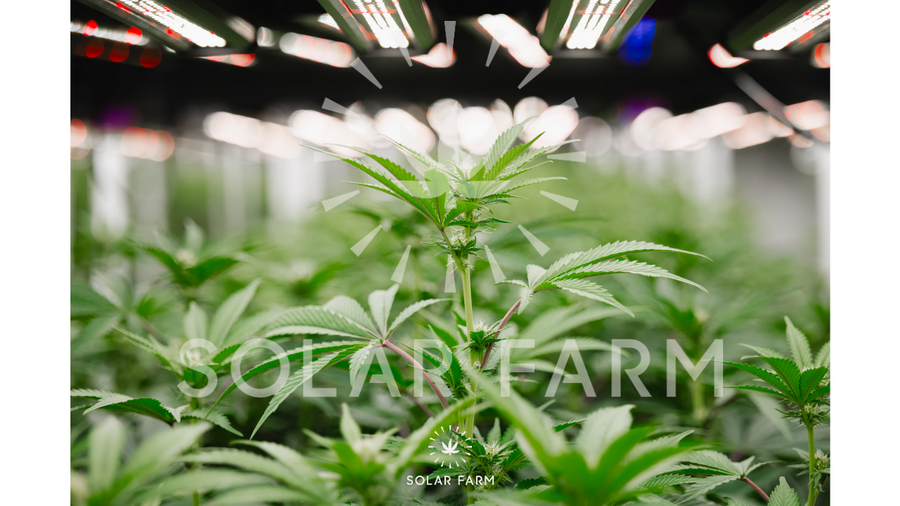
Why Heat Data Recording Matters
At Solar Farm Thailand, every grow room runs under strict data logging to prevent stress before symptoms appear. Continuous monitoring of:
- Temperature (air and canopy level)
- Humidity (to maintain proper vapor pressure deficit)
- Light intensity and distance
ensures the system reacts automatically before damage begins. If temperature rises or humidity drops too low, the system adjusts fans, air conditioning, or CO₂ controls in real time.
Effects of Poor Monitoring
Without data records, small fluctuations go unnoticed. A few hours above 35–40 °C can:
- Destroy leaf structure
- Trigger root rot in hydro setups
- Cause uneven bud development and yield loss
- Lower cannabinoid and terpene concentration
These effects accumulate and reduce overall harvest consistency, critical for medical cannabis standards.
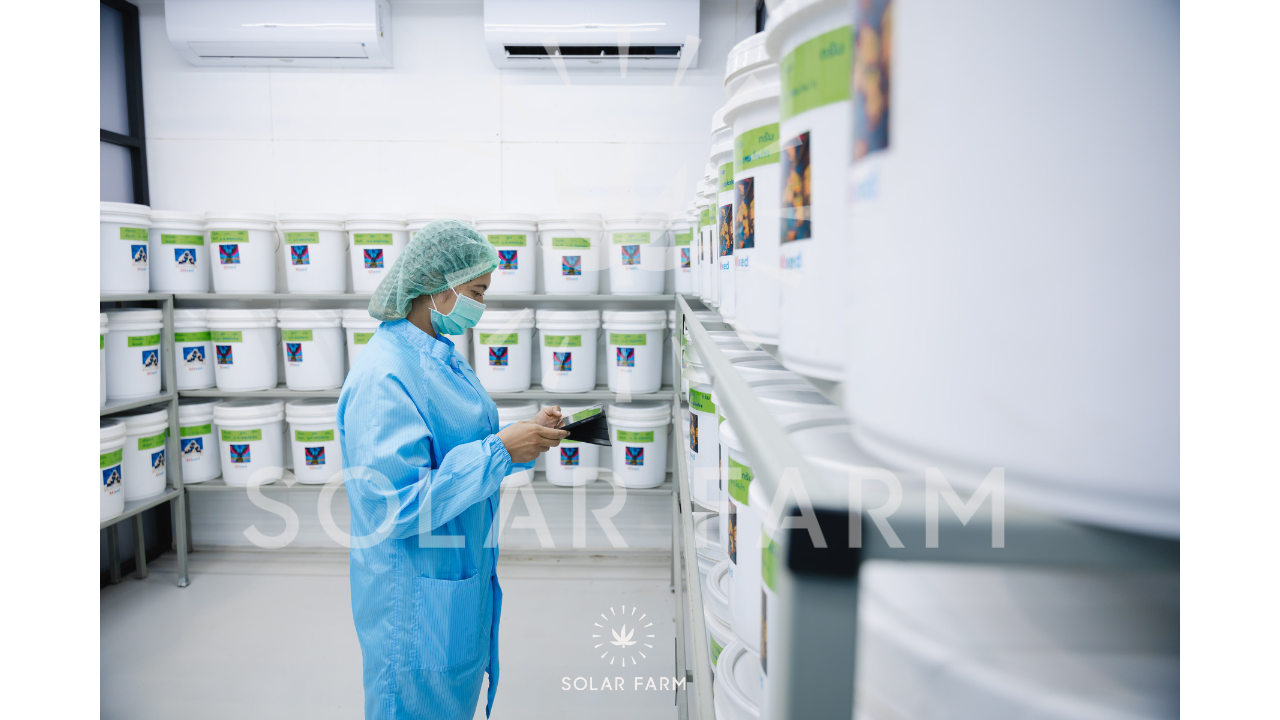
Data-Driven Prevention at Solar Farm Thailand
By tracking environmental parameters every minute, Solar Farm Thailand’s system detects and corrects heat spikes instantly. Historical logs show how each strain reacts to specific temperature and humidity patterns. This allows predictive adjustments before the next heat event, ensuring:
- Stable canopy temperature
- Balanced humidity for transpiration
- Uniform flowering development
- GACP-compliant documentation for audits
Heat stress is preventable when temperature, humidity, and light data are continuously recorded and analyzed. At Solar Farm Thailand, environmental data isn’t just a record: it’s a control tool protecting every gram of medical-grade cannabis.
Sensor Placement and Calibration Checks
A single air probe beside the door says little about the canopy. Typical practice is several sensors at canopy height per room, one directly under the lights where hot spots form first, compared with the return-air value so a widening gap is caught early.
Sensors also drift. A probe reading slightly low lets a room creep towards the 35 to 40 °C band described above while the log looks healthy, so the usual safeguard is a scheduled check against a reference instrument, recording date, reading and checker. Across 22 flowering rooms, as at Solar Farm Thailand, that is a rota item, not an afterthought.
Alarm thresholds are set per growth stage and documented with who receives the alert and how fast they must respond. A threshold nobody owns is a notification, not a control.
What a GACP Auditor Reads in the Heat Log
An auditor wants more than a chart of stable temperatures. They pick a batch number, trace it to its room and pull that cycle’s environmental record, so the log must carry room, lot, timestamps that cannot be edited, and a link from each excursion to the corrective action taken.
Any period above the set limit is a deviation, recorded with duration, cause, action taken and whether the batch was assessed. A licensed buyer comparing these records with the Certificate of Analysis wants the same thing: an unusual potency or terpene result explained by what happened in the room. Gaps count too; an afternoon with a sensor offline is a window nobody can verify.
Root Causes of Heat Events and Their Corrections
Most indoor heat events share a few causes:
- Cooling sized for an empty room, not a full canopy at peak light
- A cooling unit failing at midday with no alarm of its own
- Airflow blocked by tall plants, leaving a still pocket under the lights
- Lights lowered after defoliation without rechecking the canopy reading
The corrective order is fixed: cut the heat load by dimming or raising the lights, restore air movement, then bring the cooling back. Prevention follows: move the threshold, add a sensor at the blind spot or shorten the service interval, and record the change so the next audit sees a closed loop.
Last updated: 22 September 2026